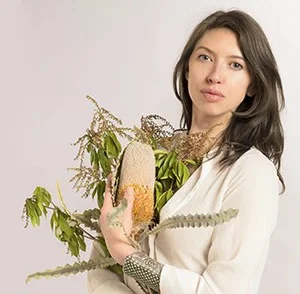
issue 23: Human Nature
issue 23: Human Nature
“All creatures must learn to coexist. That’s why the brown bear and the field mouse can share their lives in harmony. Of course, they can’t mate or the mice would explode.” ― Betty White
To live interdependently within healthy parameters of necessary boundaries is the secret to a happy co-existence. As a (perhaps a rogue) species within the Natural Order, this applies to us as well. We are Humanimals after all. We may operate mostly apart from Nature but we are still a part of the Natural Order. Though we wear a common skin suit and share a common Homo genus, we are anything but a homogeneous species.
We are… wolves in sheep’s clothing, glory hounds, snakes in the grass, dark horses, black sheep, lone wolves, social butterflies, queen bees… we exhibit a tendency toward pack mentality with pecking orders, we engage in fawning, scapegoating and monkey business…
There are endless animal idioms and metaphors to express the many facets of our human nature. They form a kind of folk psychology in which the animal world represents a lexicon of human traits and tendencies. Of course, these expressions are not representative of the true nature of the beast, here the animal serves only as a symbol. Dense with association, they are communication tropes that can be easily unpacked, even across cultures, to describe complex character profiles and social situations.
It’s also a more colorful and lighthearted way of acknowledging some of the darker aspects of our human behavior. Describing humans with animal-like qualities or portraying animals with human foibles and agendas provides both a mirror and a degree of emotional distance from the aspects of our nature that make us recoil because the truth can sting a bit. It can help us approach subjects most would rather avoid and it can give us insight into ourselves, helping us to see more clearly what kind of humanimals we’re actually behaving as or dealing with so we may better act in accord with our higher values and aims rather than reacting from our more primal instincts and impulses.
With a bit of playful objectivity, we can say, “Ah! Here we have a Homo lupus sub pelle ovina (“wolf in sheep’s clothing”) or Homo serpens in gramine (“snake in the grass)”… and we can carry on with life knowing better how to conduct ourselves around certain subspecies within the human taxonomy.
Of course, we don’t want to “pigeon-hole” people, but it is to our personal and evolutionary benefit to know the true nature of who or what we’re dealing with under the human skin suit. Some humanimals are predominantly predatory or parasitic by nature, some are seductive though highly toxic, some are aggressive bullies posing as leaders, some are morally depraved presenting as people of influence, some mimic the traits and behaviors of others to achieve their own ends, some are purely benevolent or benign though mistaken as deceptive or predatory… Knowledge is foresight and foresight is power. We cannot pretend we’re all the same deep down, nor can we trust surface appearances since the façade can be quite deceiving. As another wise woman once pondered, “If the adorable honey badger tears your face off for trying to snuggle it like a kitten, who is really to blame?” 🤔
And with that, a warm welcome to the jungle. I hope you enjoy this fun and fascinating expedition as we get to know the different aspects and qualities of our humanimal nature as well as the higher potentials of a more evolved humanity. By increasing our awareness and literally engaging the fuller aspects of our already magnificent human brains, we have the potential to evolve beyond the more reactive, self-serving and short-sighted Homo sapiens 1.0 limited by a tragically myopic view of the world to a Homo sapiens metacognitivus, a human with a “birds eye view” whose enhanced discernment, responses and choices are based on a more holistic perception of reality. Think of Homo sapiens metacognitivus as a new emergent species more adept at responding creatively and constructively to challenges; one that is far more collaborative rather than competitive by nature, with enhanced “theory of mind” and greater appreciation for where others may be coming from or experiencing thus relating to the world with more compassion and empathy; and one that embraces diversity knowing that we each play an integral part in the greater ecosystems—the “circles within circles”—of our world. That is a vision worth nurturing in my book. But first we must acknowledge the chapters of our past in order to write those more exciting chapters to come!
In Truth, Beauty and Goodness,
B. Monique
P.S. This is a meatier buffet than usual so I will give you time to digest before sending the follow-up “Greater World Zootopia” where I detail the community proposal presentation I gave to the Pruett’s weeks prior to Alyn’s initial Zoom meeting in July of last year. It includes many tools and recommendations that would be beneficial for current efforts as well as “the receipts” so no one has to wonder about certain facts.
Find the full issue 23: Human Nature here.